
Gardening Induced Madness
You've been warned

“A sane person to an insane society must appear insane.” - Kurt Vonnegut
“To be sane in a mad time is bad for the brain and worse for the heart.” - Wendell Berry.
Everyone talks about how healthy gardening is for you, but that’s a pile of horse manure. Which, as a gardener, I can’t get enough of. It makes great compost, and once you start making compost, you’ll want to put it to use. And when you do, you’ll be inflicted with an intoxicating desire to continue stewarding death and resurrection, as I discovered, when I returned from a summer away to find an enormous pumpkin sprawling out of our guerilla compost bin. It was all downhill from there.
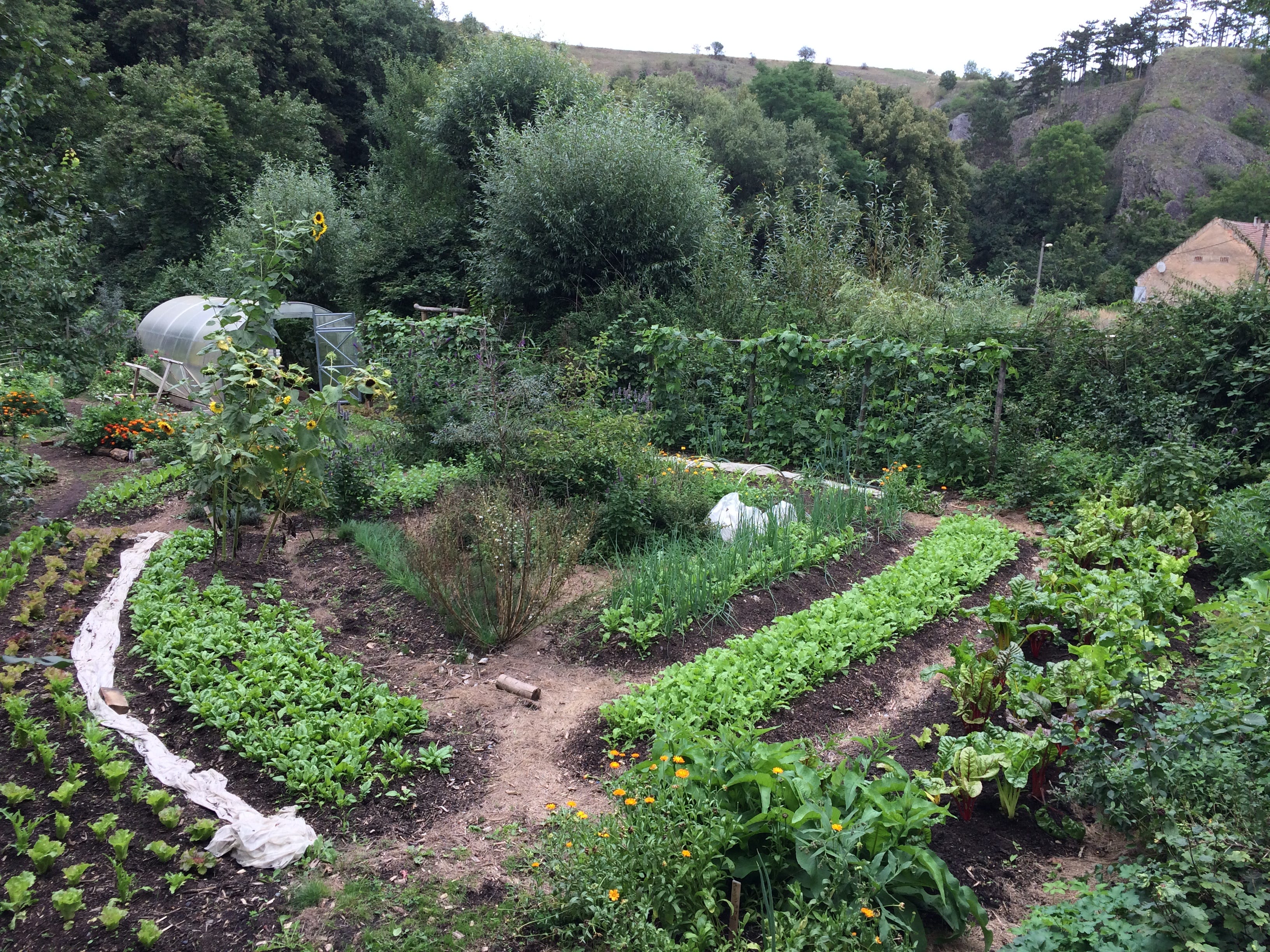
Over time, this compulsion festers into a form of madness, the deepest ravines of which can be avoided in the realms of your own garden indefinitely, or in someone else’s garden that shares your sickness. But to venture beyond the guarded spaces of a well-made garden, in this day and age, is to invite an onslaught of imagination - that south-facing wall would be an ideal spot for a fig tree, and those piles of leaves would be perfect to make potato beds. I’d plant an apple there, and a service berry to the south of it, with mint and lavender below it, and yes, definitely a few sea berries and raspberries as a hedge along the fence to hide the neighbor’s lawn. He waters the grass? You’ve got to be kidding me. And now he’s got the Roundup? Get a goose, for God’s sake!
On a recent visit back stateside, I told my friend he ought to compost his food scraps.
“You’ve got the space. Wire four pallets together and put a lid on it to keep the critters out. If it smells bad, add leaves, wood chips, charcoal, or shredded cardboard. That’s it. That’s all you do.”
He sighed. He’s patient with me because he knows about my condition.
“What am I gonna tell the neighbors? ‘There’s my compost pile.’”
“What else are you going to talk about with them? Football, the weather, Washington D.C.? Hell yea, that’s your compost pile! You tell them this: ‘I’m not a sucker who spends his weekend bagging leaves all day. I just throw them in this box here I made for nothing, and it all decomposes to a nice black earth that smells like a forest floor, and then I toss it in those buckets over there on the deck and grow some kickass jalapeños. You like spicy stuff, No? Well hang on there buddy, I’ll go get you a jar. Hey, Suzy! Bring out one of those jars. No, not the tomato sauce! Ah sure, bring one of those out too for Phil here. He’s going to start his own compost pile. Ain’t that right, buddy?!”
That’s what you tell the neighbors, man.
“Uh, yeah, sure, man, maybe I’ll give it a try.”
“Really!? That’s great. I knew you weren’t like all the rest of them. So let me tell you about composting your own humanure and using it to grow food. I promise, it’s not crazy, and completely safe, and actually really easy, and will save you water and money, and you’ll get exercise and, and…”
But now my friend’s eyes are glazed over, he’s got a queasy look on his face. He gives me a limp smile, nodding absently as he guides me out the front door and slowly shuts it in my face as I blabber on about compost toilets, permaculture, no-dig beds, and chickens.
His wife walks in the room shaking her head. “What happened to Brett? He used to be so… normal.”
My friend looks up at the ceiling, closes his eyes, let’s out a sigh, and replies, “He started making compost.”
I’m ruined, really. Try as I might to find beauty, inspiration, or a single thing worth preserving, Suburban America, my homeland, now cripples me with thoughts of waste and lost opportunities. And mind you, I’m not just talking about growing good food. Food is certainly needed, as everyone has to eat. But the ugliness of the landscapes we are creating is destroying us from the inside, faster and more surely than the toxic food most people eat daily. We are rapidly turning what was somewhere into landscapes indistinguishable from any other, one gigantic strip mall. The green spaces that remain are sterile parks, dead cemeteries, and golf courses, more toxic than coal mines.
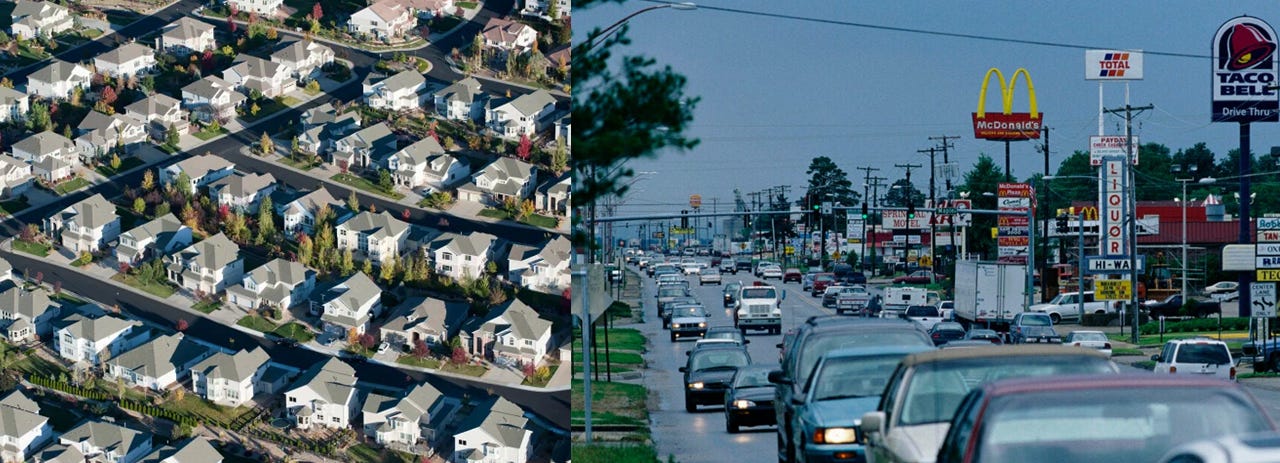
We have ritualized the disposal of fertility, and therefore the potential productivity of the land people live on, when each year, how many tons of grass and leaves are thrown away? This energy, this sunlight, this ‘waste,’ could grow nearly as many tons of food. A shame? No, it’s a tragedy leading to disaster and destitution.
I am more at ease here in central Bohemia because it is an edible landscape, and an edible landscape means a beautiful one, naturally. Within a literal stone’s throw from my house there are two apple trees, an English walnut, four hazelnuts, lindens with edible leaves, honey fungus and Judas Ear mushrooms, dozens of elderberries, rose hips, a handful of wild plum trees, a cherry tree, a patch of red and black currants, gooseberries, wild garlic along the stream, and stinging nettles everywhere in spring. Aside from the cherry, I’m not responsible for any of it. This is not unique. Even within the city of Prague, there are public orchards and vineyards. Walk through any park or drive down a country road, and you’ll find fruit and nut trees everywhere. Go to any Czech’s house, and I mean it, anyone’s house, and at an absolute minimum, you’ll find an apple, or plum, or pear, or walnut tree in the garden. More likely, you’ll also find a plot of potatoes, a few rows of garlic and onions, a small greenhouse for tomatoes and cucumbers, a pumpkin growing out of a compost pile, and currants and raspberries along a stone wall.
In these landscapes, I am well. Take me to an Ikea parking lot, or a massive monoculture field that characterizes much of the agricultural land in the U.S. and Bohemia, and my eyelids will start to twitch, an idiotic trance will take hold, and only a straightjacket will keep me from throwing something hard through glass, and running for my scythe and shovel.
I sometimes lose hope that I can recover from this madness. In these dark times, I confess with shame, I wish madness upon the rest of the world, and I hope that Mother Nature works her magic in her well-known mysterious ways. I, after all, was saved by a mulberry tree. It grew along the edge of a thicket of trees that me and my friend used to play in as kids, planted by a bird, no doubt. The sweet taste of those long black berries, the glossy big leaves of the tree, leaning out of the thicket for light, and the feeling I had plucking them off the tree and stuffing them into my mouth, and knowing that this was good. This is what it was all about.
Then the tree was cut down, and I went to school, and watched TV, and played football, and did drugs in that thicket we used to play in as kids, where the mulberry grew. I nearly forgot what I had come to know as a child.
Keep reading with a 7-day free trial
Subscribe to Mad Farmer to keep reading this post and get 7 days of free access to the full post archives.