
Intelligent Design

“Prove to me that chance did ever make a sycamore tree, a yellow-throated warbler nesting and singing high up among the limbs and the golden leaf-light, and a man to love the tree, the bird, the song his life long, and by his love to save them, so far, from all machines. By chance? Prove it, then, and I by chance will kiss your ass.”
-Wendell Berry
In my finer moments, despite having no musical abilities whatsoever, I feel like a conductor. But what is a conductor without his orchestra? A lunatic waiving a wand at empty seats. So no, perhaps I’m more of a painter, or yes, sculptor. My grandfather was a sculptor, you see, he formed people and animals and beautiful shapes from clay.
The making of this farm was a sort of sculpting of a landscape which attracts all sorts of life, be it bees, people, ladybugs or chickadees. It’s the life of the place that makes me ponder intelligent design, how the natural world all just makes so much sense. The ground cracks when dry to receive the rain. You must give something to the soil to get something from it, the pest feeds the predator, death brings life in a cycle where there is no waste. We invented all the waste.
Chance can’t explain all this, I know that now. There are laws and an order to this universe, and that cannot be explained by the chance bouncing of atoms. You can name the processes and organisms in a compost heap, describe them even, but you cannot explain, in any meaningful sense, how death becomes life again. Anyone who’s investigated this question in detail will reach that conclusion. It’s the conclusion of one of the most brilliant physicists who ever lived, Neil Bohr, when he said, "When it comes to atoms, language can be used only as in poetry.”
I think our farm is intelligently designed, but then again, I would, because I designed it. Designing a farm, or garden, is a different process than planning a season. If you want to really optimize your farm, you’ve got to have a plan.
I don’t have a plan. And I also don’t like the word optimize. It sounds like a word salesman or chatbots use. I don’t necessarily recommend trying to run a farm for a living without having any sort of crop plan, and lack of one is frustrating for my wife and farm students at times. But you know what’s even more frustrating? When things don’t go according to plan.
I’ve tried to make one before, but have given up. It’s working out just fine, mainly because we’ve been able to grow the farm organically (pun intended) over the last seven years, and this has given me a chance to begin to grasp the soil, scale, microclimate, resources available, and observe what grows and sells well, and what doesn’t. I see a season’s crop plan like trying to anticipate what will be on a test and attempting to memorize the answers. I’d rather try to understand the patterns of a season and go from there.
But I’m rambling now. Too many long days are catching up with me.
We grow a lot of crops in a very small space. One of our strategies for doing this is succession planting.
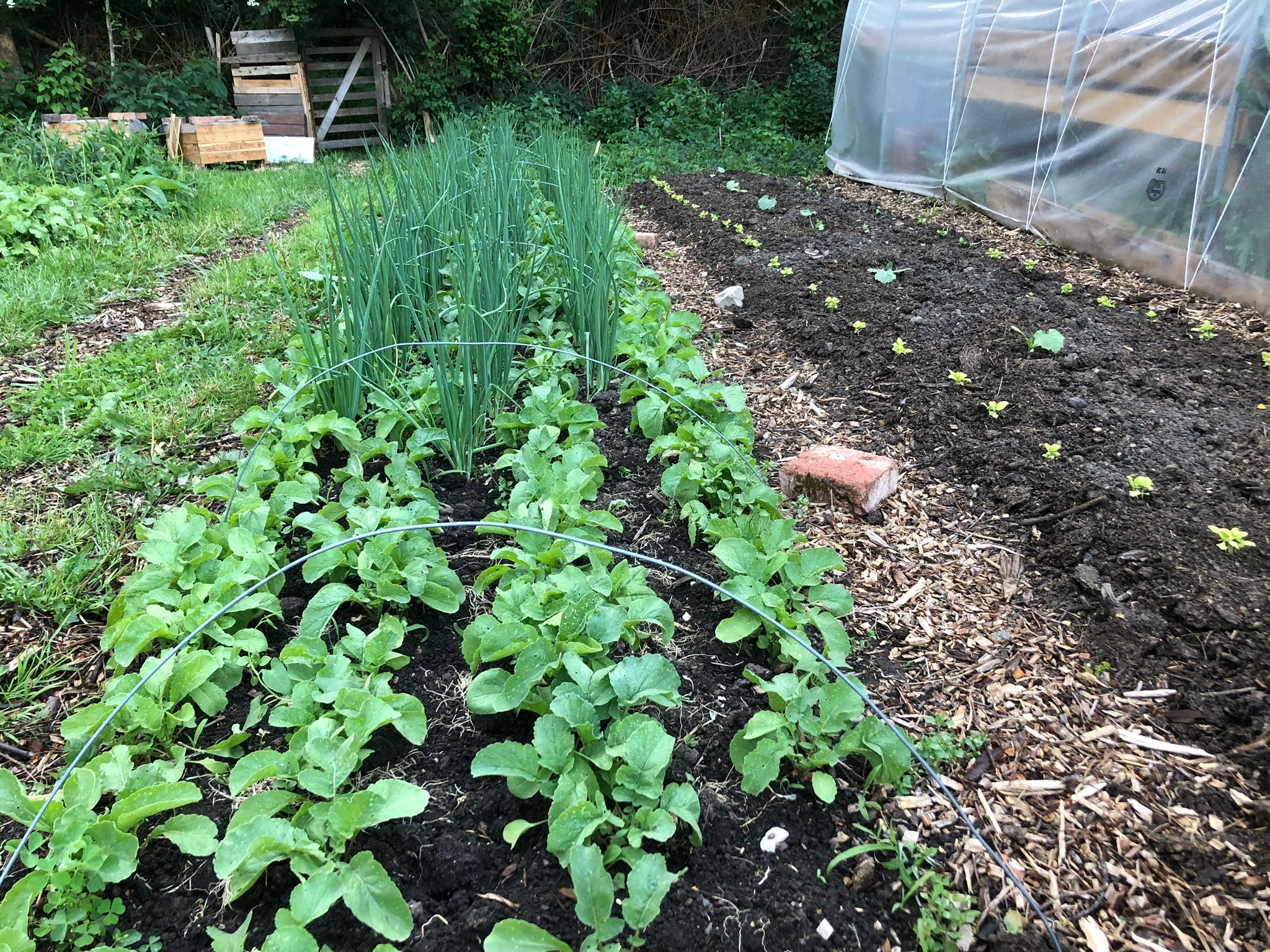
In this case, spring onions were grown in trays on our hotbed and transplanted in late March. We add wire arches on onion beds to keep the fleece from damaging the tops. Before we added the arches, I ran radish seed in between the rows with our seeder. The small radish roots don’t interfere with the deeper onion roots and also don’t mind a little shade, even once the onions mature.
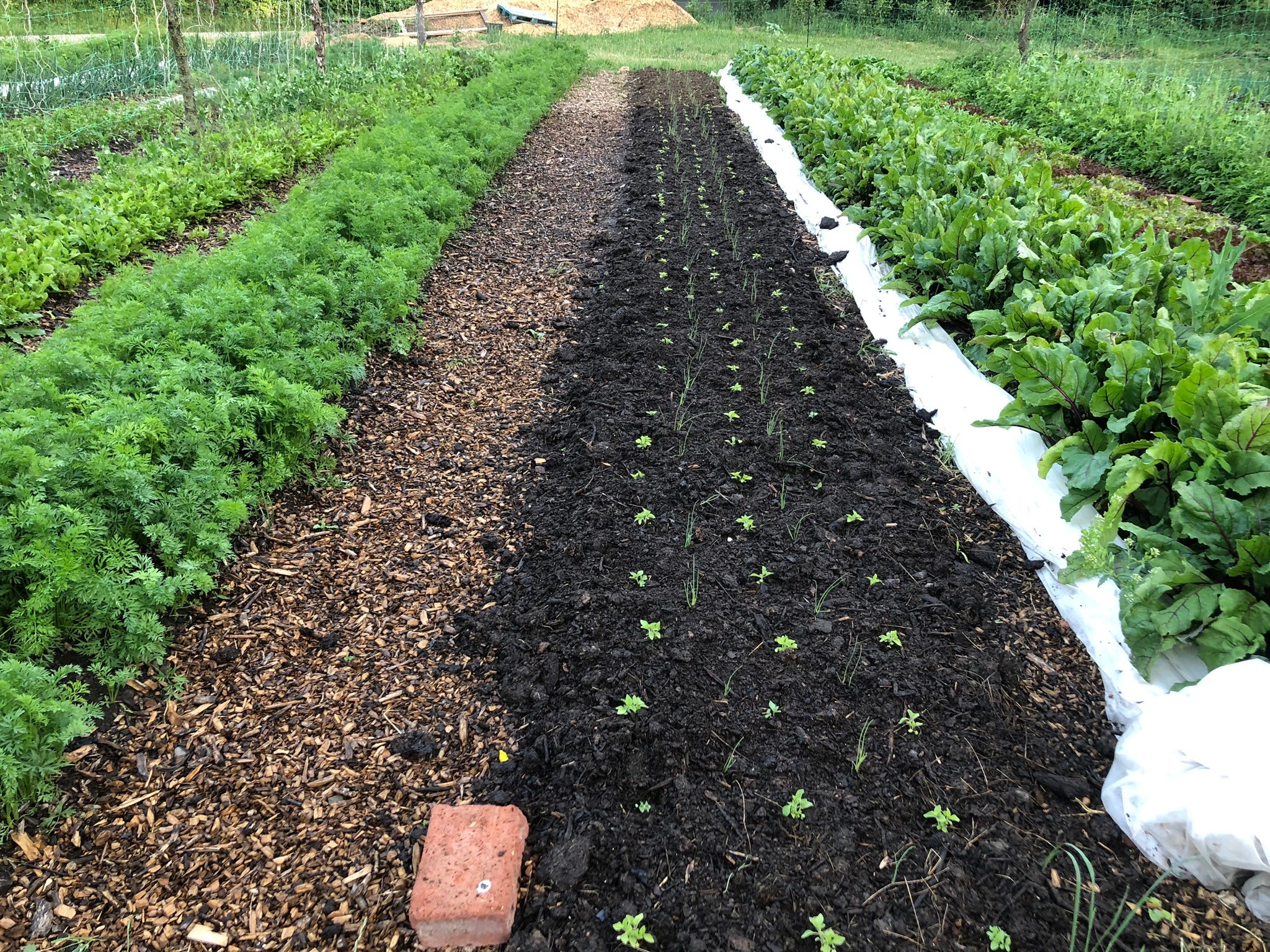
Onions work well as a companion plant with many herbs as well, especially the types that can be cut several times, like parsley, cilantro, basil and tulsi. We plant onions in between our strawberries, too.
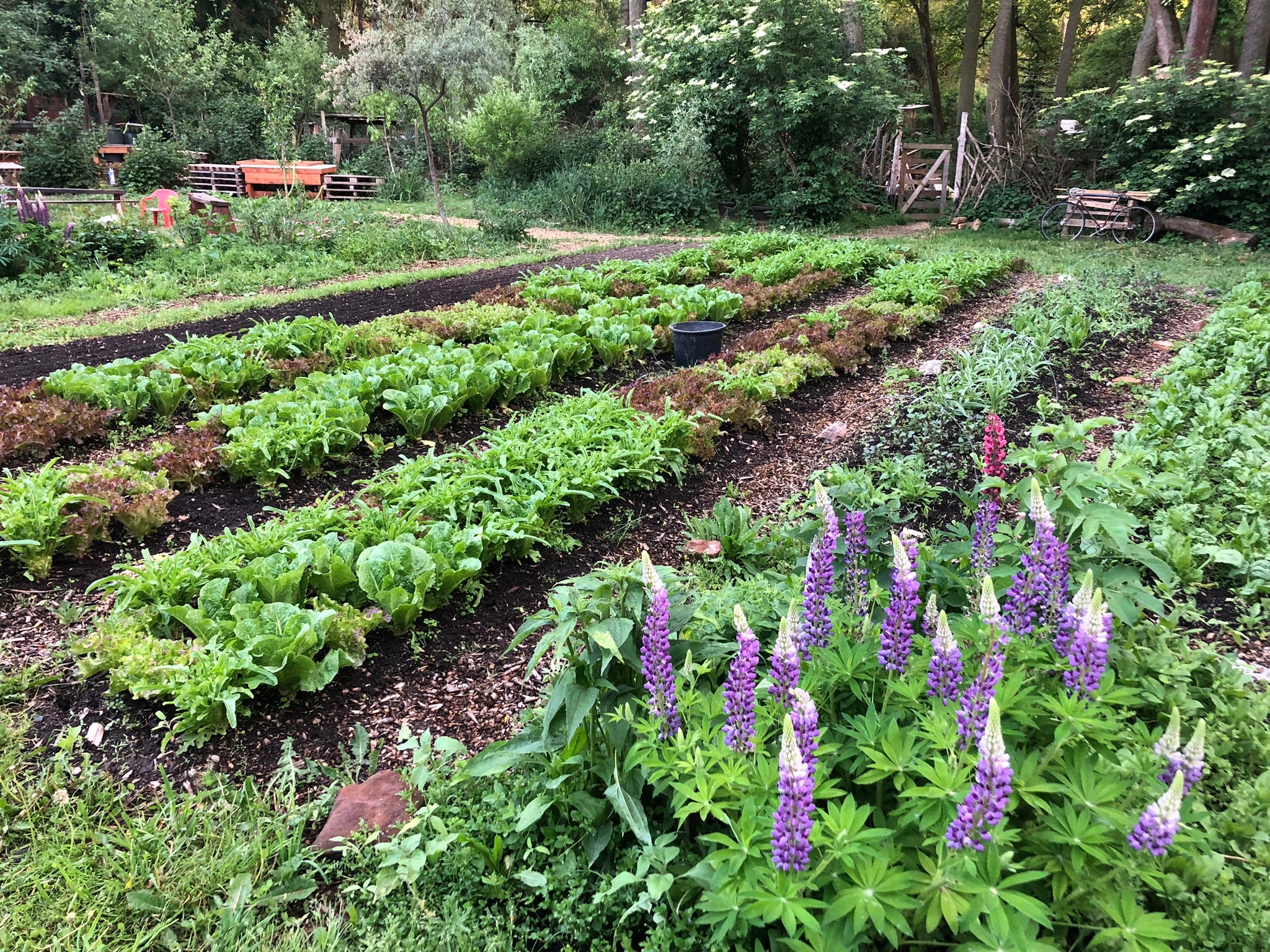
The lettuce beds are at peak season now and have a few more weeks remaining before they start to bolt and make flowers. Then they become bitter and don’t taste very good. Two weeks before you harvest out greens, whether it’s lettuce, arugula, or spinach, you can harvest a few patches down the bed and transplant zucchinis, or peppers, or whatever larger crop you’d like. The new plants then have two weeks in the ground to establish and all that time you can still be harvesting your greens. We like to transplant zucchinis directly into beds of our Asian salad mix or spinach that is usually finishing right around mid-May when the zucchinis are ready to go in the ground.
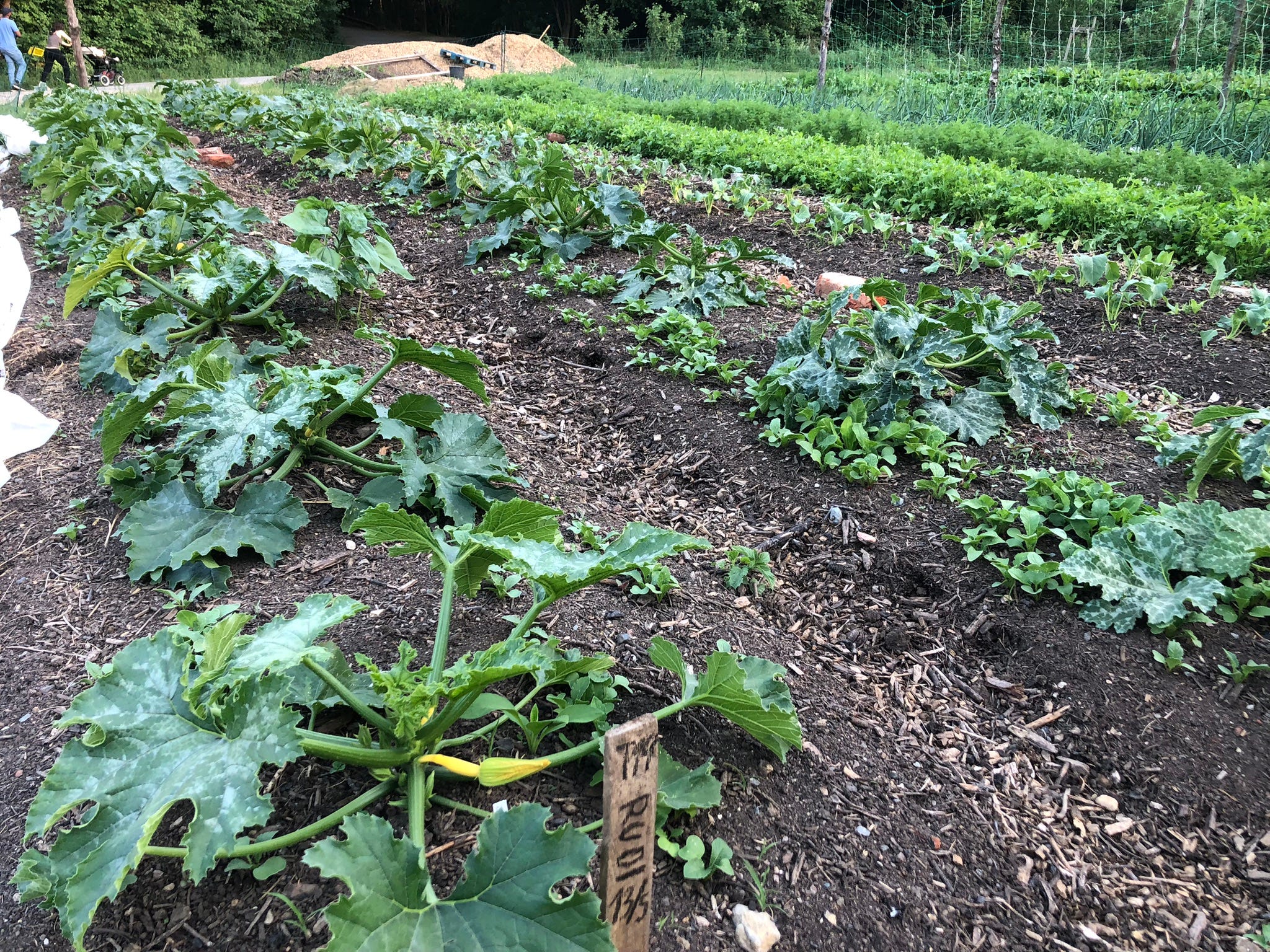
We seeded radishes in these zucchini beds after we transplanted. I don’t think this one will be very successful, because of how rapidly the zuchs take over the bed once they get established. I didn’t have much hope this would work, but there’s no harm in trying.
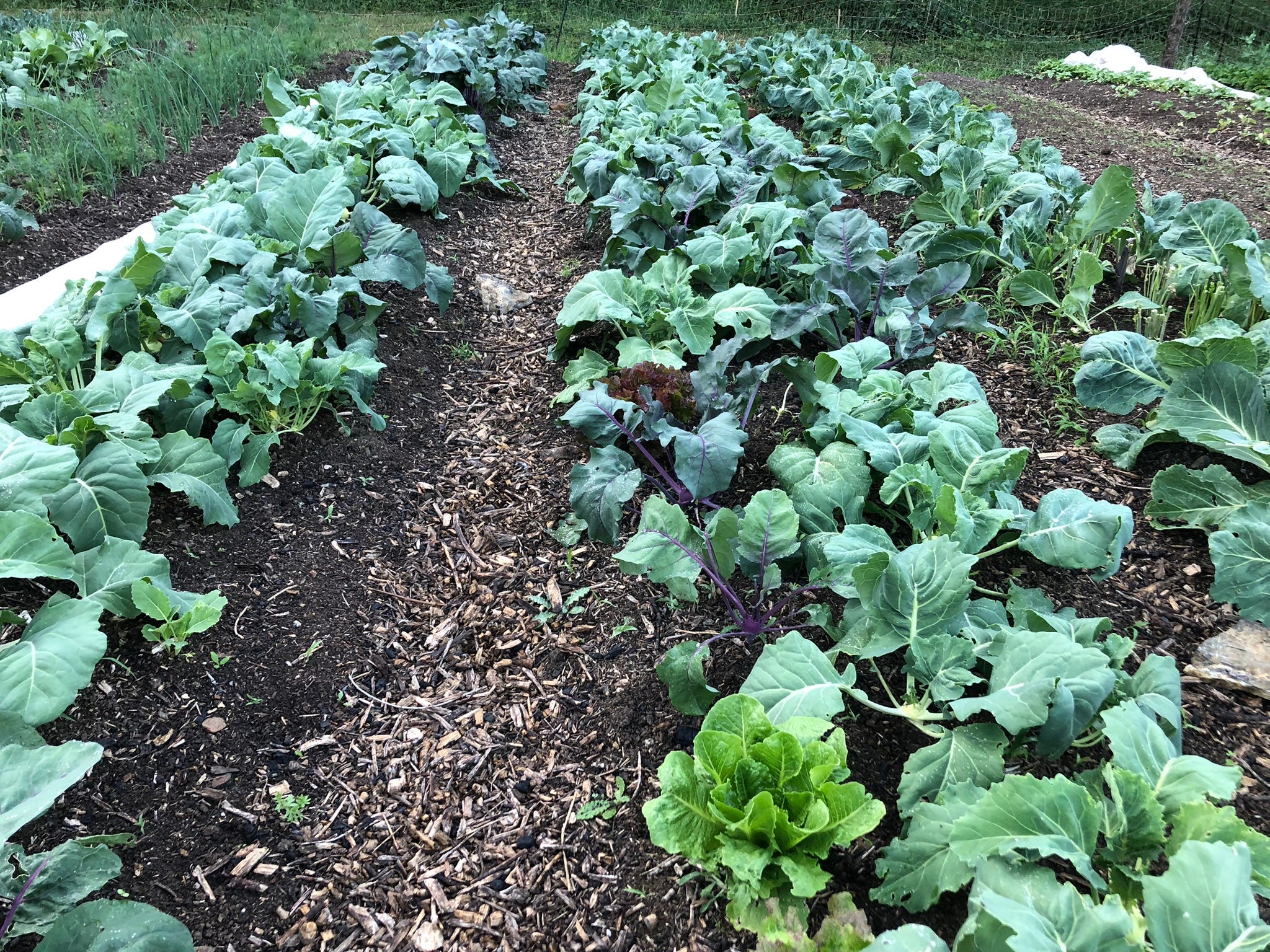
We don’t leave any space bare on the farm. Nature abhors a vacuum. If there isn’t something planted, weeds will grow, and we are wasting our space, time and energy. That’s why we always try to keep extra lettuce starts on hand that can be transplanted into gaps that arise if a slug eats something or a transplant just doesn’t make it.
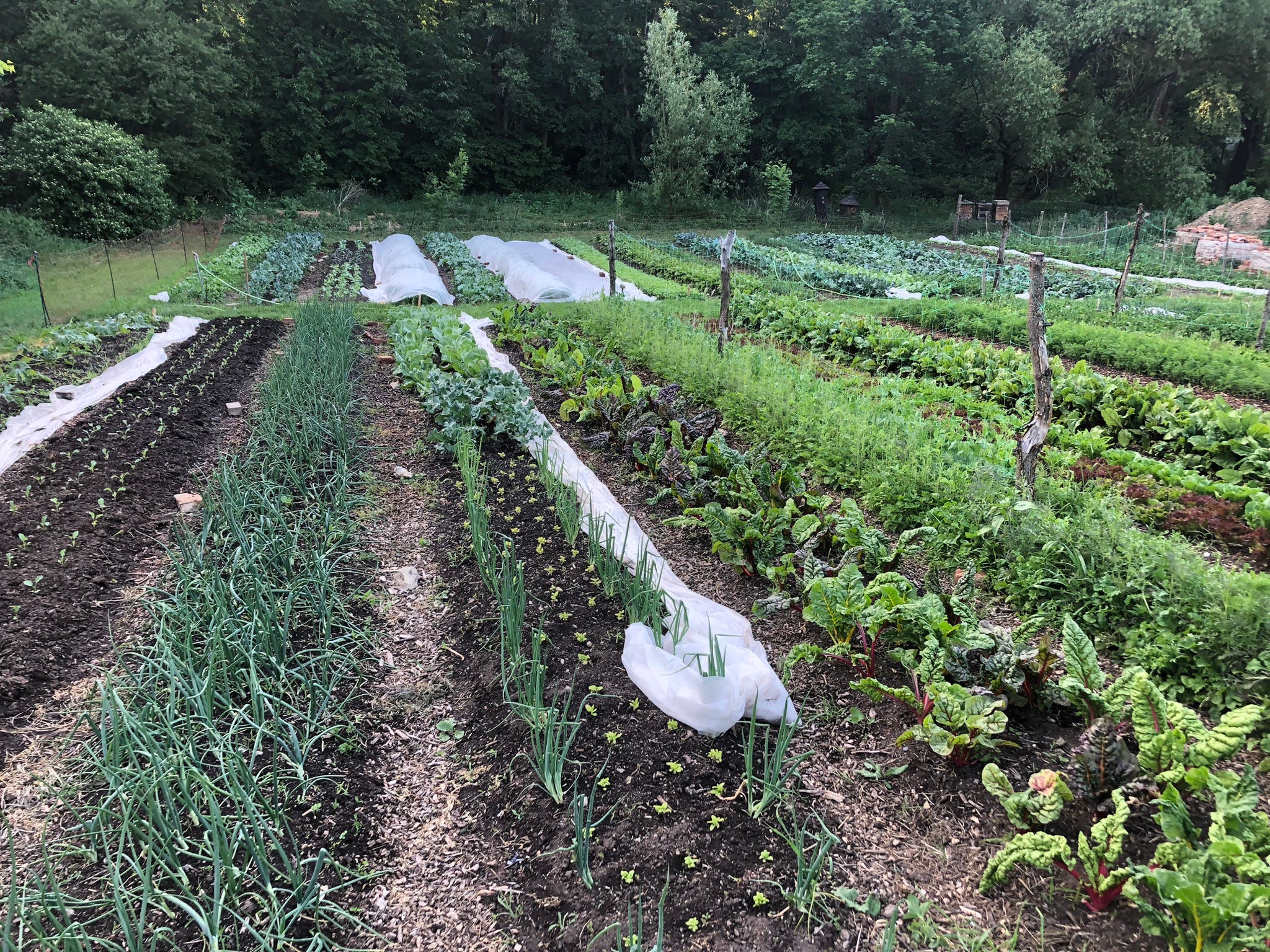
This middle bed has broccoli and cabbage that was inter-sown with spinach. We got three cuts off the spinach, pulled it out and filled the gaps with basil. The bed on the right with the trellis is for peas, and underneath is a bed of our Asian salad mix. The peas go up, and we can use the space underneath for a quick crop.
Another succession we’re trying this year is planting beans into garlic beds on our field. I think the beans should be a reasonable size once we pull the garlic and will have a month start already for sooner harvests.
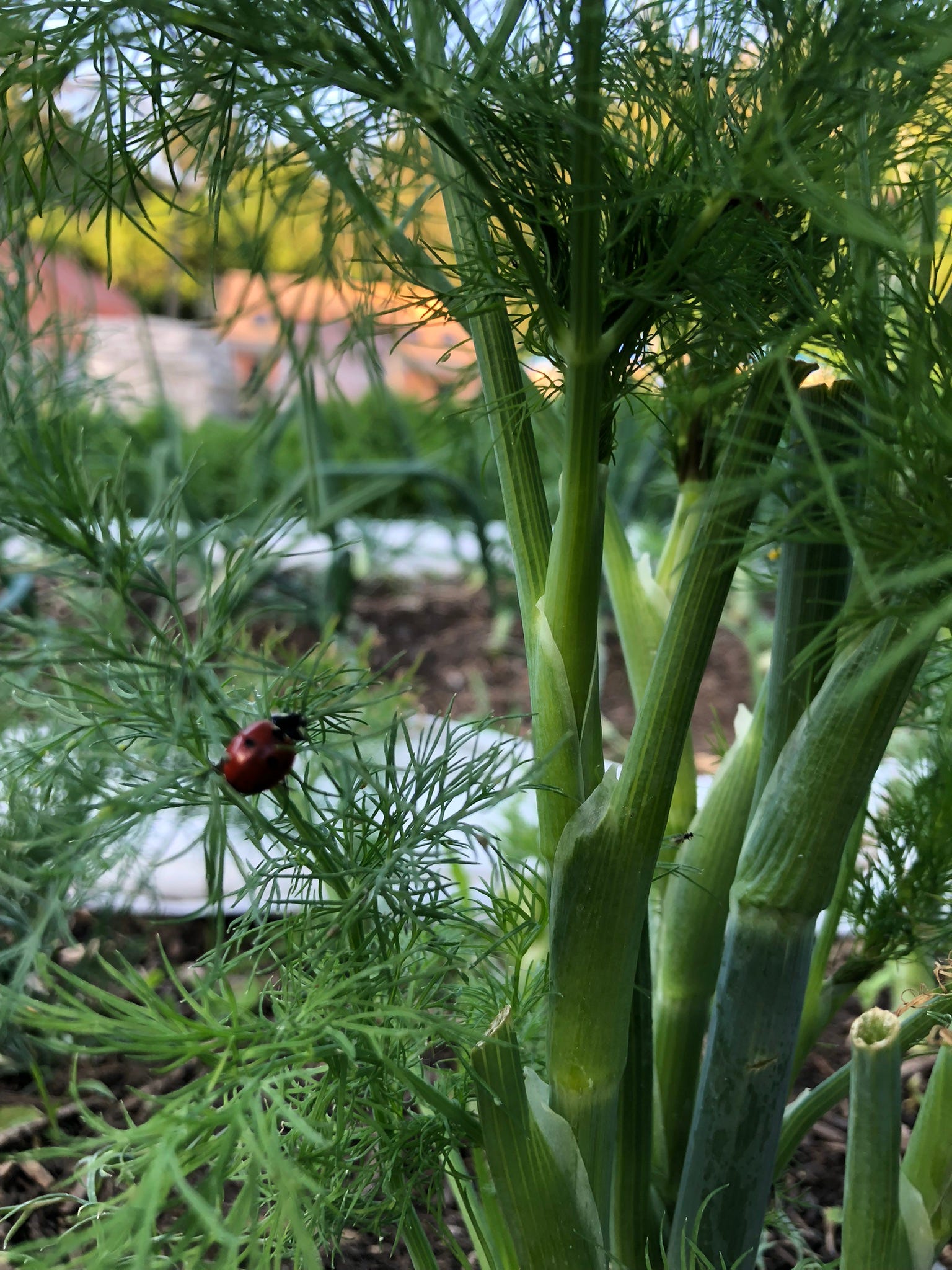
As I surveyed the garden beds on the meadow the other evening, I counted around fifteen ladybugs patrolling the dill. It’s always been one of those crops that we’ve had a hard time growing because they’re always crawling with aphids, the vampire bugs, sucking the sap from the plants. But not this year, the dill has grown splendidly. The ladybugs were doing what the love to do, what they were made to do, eating aphids.
The lightning bugs will start glowing soon. They’re already crash landing in my salad at dinner, preparing for their glorious mid-summer display. What a remarkable creature, a lightning bug. Magical, really.
I’ve heard some discussions the last few years that we are living in a simulation, someone else’s video game. When I listen to these discussions, what I hear are people lost in a digital hell talking about “intelligent design”, what new-agers call “nature”, or what simple people simply call God. To think this is all just bits and bytes, or atoms colliding by chance with a bang, is not intelligent, and strips life of its mystery and beauty - and that’s directed at myself for most of my twenties. It’s an ignorant and blind way to experience life. But if you want to see, just watch a ladybug eat aphids, or better yet, follow the soft glowing light of a firefly on mid-summer’s eve.
-BG
Great work Brett. Looks great. Just had our last frost (🤞). Your system is very similar to mine.
Try doing a transplant of tokyo market type turnips when putting in zukes. Or seed two weeks ahead of transplanting zukes.
It looks like I am going to enjoy reading your accomplishments!!! I am still learning about our property garden wise.... good grief, but I love the trial and error. Originally this property was a landscape beauty and behemoth.... and 25 years younger.... it was easy... added gardening and soon it's a job... one of love .... Still entering your mid 80's it becomes a lot, not a burden but still a lot. So now simplifying is the object and getting things to be self maintaining (if possible). So overlooking your ideas makes me happy and tonight I'll bury myself reading it.... thank you